
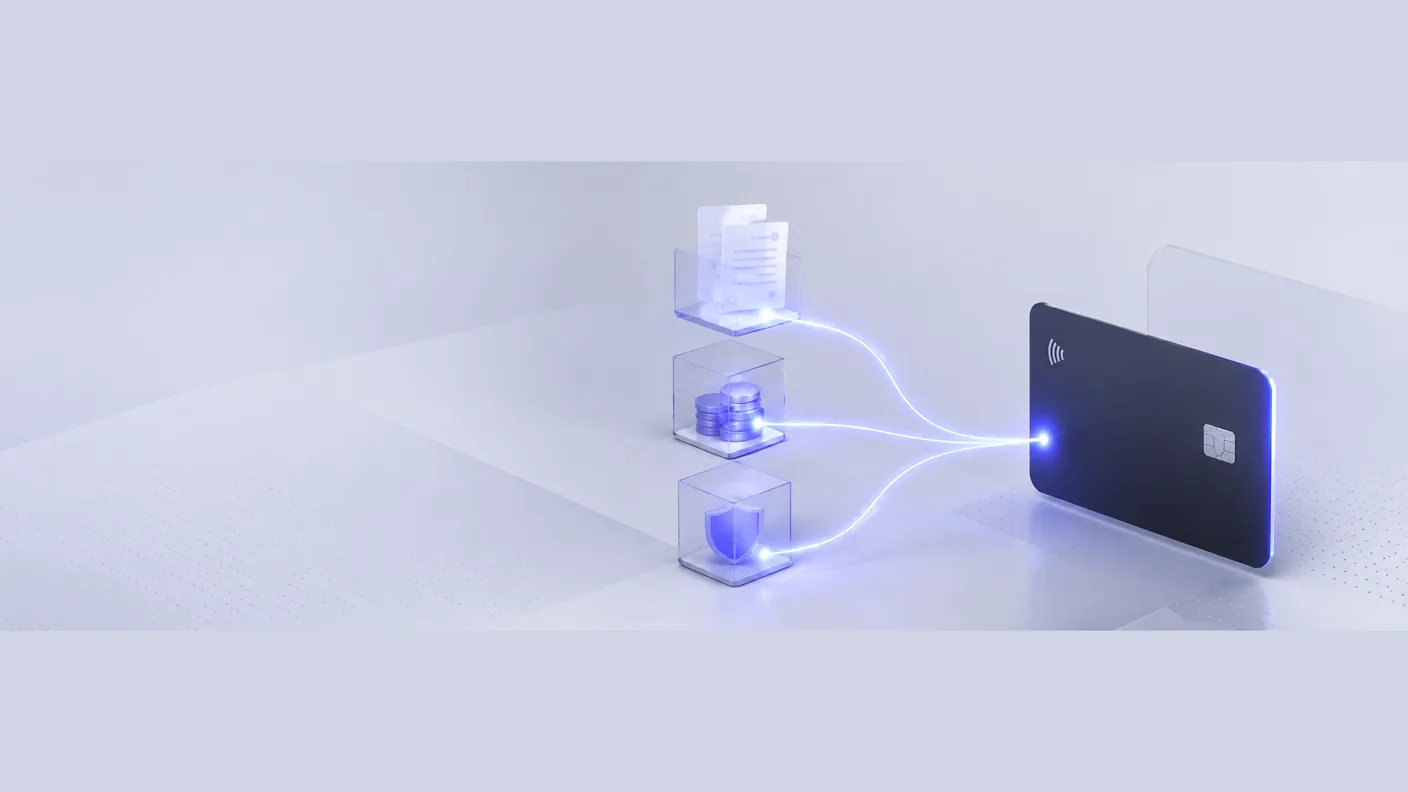
Split payment is the Tax Reform mechanism in which IBS and CBS are segregated and collected at the financial settlement of a payment. Instead of receiving the full amount and remitting the tax later, the supplier receives the net amount, while the tax portion goes to the Federal Revenue Service (CBS) and the IBS Steering Committee. The mechanism is governed by articles 31 to 35 of Complementary Law 214/2025 and Decree 12,955/2026. The decree provides for at least two stages, beginning with an optional B2B stage, but the activation dates depend on a joint RFB/CGIBS act. As of October 4, 2026, the announced activity is controlled integration testing, not production collection.
What split payment is (and what changes from today)
Under the current system, tax is embedded in the price and flows through the seller’s account: the company receives the full invoice amount, assesses ICMS, ISS, PIS and COFINS, and remits the following month. Between receipt and remittance, the tax amount works as working capital — and when the company fails, falls behind or evades, the tax authority is left without the tax the consumer has already paid.
Split payment reverses this logic. LC 214/2025 lists the split as one of the ways of extinguishing the debt of IBS and CBS (art. 27, III) and governs how it works in articles 31 to 35: the party that segregates and collects is the payment service provider, at the exact moment the transaction is settled.
In practice, the flow of a payment with split has five moments:
- Issuance — the supplier issues the tax document with IBS and CBS highlighted and originates the charge (boleto, Pix, TED, TEF) already carrying the tax fields and the identification of the tax document.
- Payment — the customer pays the full amount. Nothing changes for the payer.
- Query — before releasing the funds, the payment system queries the shared-governance platform of the Federal Revenue Service and the IBS Steering Committee to learn how much of that debt is still open.
- Segregation — the provider separates only the amount due and passes it to the Union (CBS) and to the Steering Committee (IBS).
- Net settlement — the supplier receives the amount without the tax. The buyer’s credit arises tied to that confirmed payment, not merely to the amount highlighted on the invoice.
This last point explains why split payment is more than a collection mechanism: LC 214 connects the taking of credits (arts. 47 to 56) to the actual extinguishing of the debt at the previous stage. The split is the fastest route to that extinguishing — and, for that reason, it tends to become the market standard in business-to-business operations, even in the optional phase.
Legal basis: where each rule is written
Anyone wishing to check the rules at the source finds split payment across normative layers, each with a role:
| Rule | Date | What it sets |
|---|---|---|
| EC 132/2023 | 12/20/2023 | Authorizes the new collection model in the consumption-tax reform |
| LC 214/2025, arts. 31 to 35 | 01/16/2025 | Creates split payment: duties of payment providers, standard procedure (art. 32), simplified procedure (art. 33), refund of excess |
| LC 214/2025, art. 36 | 01/16/2025 | Collection by the acquirer — the procedure for payments by an instrument that does not allow segregation (e.g.: cash) |
| Decree 12,955/2026, arts. 28 to 39 | 04/29/2026 (DOU 04/30) | CBS regulation: lists the 12 arrangements, details standard and simplified procedures, receivables anticipation, Manaus Free Trade Zone, refunds and rollout in at least 2 stages |
| Joint Act RFB/CGIBS no. 2/2026 | DOU 06/03/2026 | Approved the original Integration Manual; the current CGIBS portal publishes Integration Manual and OpenAPI version 1.1.1 (checked October 4, 2026) |
| Future joint acts | pending | Activation schedule of each stage, simplified-procedure percentages by sector, enabling of the arrangements |
Reading them together matters because each layer uses its own vocabulary — that is where much of the confusion about the “procedures” of split payment comes from, addressed in the next section.
Procedures and modes: the full map
LC 214/2025 structures split payment into two procedures — standard and simplified — surrounded by contingency safeguards. On top of this legal base, the technical layer of the Public Platform broke the standard procedure into operating modes the market nicknamed “super smart” and “off-line”. The two terminologies describe the same system, on different planes.
Standard procedure (“smart” split) — art. 32 of LC 214; art. 29 of the Decree
It is the core of the system. The originator transmits to the payment provider the information that ties the payment to the operation and identifies the IBS/CBS amount. Before releasing the funds, the provider queries the platform and segregates only the difference between the debt indicated on the tax document and the portions already extinguished — if part of the tax on that invoice has already been offset with credits or paid, the system does not withhold again.
Within the standard procedure, the operation happens in two modes:
- Full mode (“super smart”) — there is near real-time communication with the Revenue Service and the Steering Committee. In the Integration Manual, this is the Super Smart Return flow: the authority returns to the provider the corrected amount and the still-open tax amount of that transaction, and the segregation comes out at the exact value. It applies to boleto, dynamic Pix and automatic Pix.
- Alternative mode (“off-line”) — when the query is unavailable, the provider withholds the full highlighted amount and the excess is refunded to the supplier within 3 business days, counted from settlement or from the linking of the operation to the tax document, whichever occurs last (LC 214, art. 32, § 4).
Simplified procedure — art. 33 of LC 214; art. 30 of the Decree
Designed for retail and for operations in which the acquirer is not a regular-regime taxpayer (final consumer, Simples opters). Instead of a query, a preset percentage — set by joint act of the RFB and the Steering Committee — is applied to the value of the operation, with adjustment at the close of the assessment period.
Three rules of the regulation deserve attention:
- Originating a transaction without identifying the CBS/IBS amounts means an automatic election of the simplified procedure (Decree, art. 30, § 3). Filling it in wrong already means opting in.
- Collection under the simplified procedure grants no right to credit for the regular-regime acquirer (Decree, art. 30, § 7, II) — a strong reason for B2B to demand the standard procedure from the supplier.
- The joint act may make the simplified procedure compulsory in B2C operations while the standard procedure does not yet work properly across the main payment instruments.
Contingency and collection by the acquirer — art. 32 (safeguards) and art. 36 of LC 214
For system failures, the law itself provides for temporary full withholding with a refund in 3 business days (the “off-line” mode above). Payments by an instrument that does not allow segregation — cash, for example — are left out of the split: in those cases the law offers collection by the acquirer (art. 36), a standalone way of extinguishing the debt listed in art. 27, IV.
| Standard · full mode (“super smart”) | Standard · alternative mode (“off-line”) | Simplified | Collection by the acquirer | |
|---|---|---|---|---|
| Basis | LC 214, art. 32; Decree, art. 29 | LC 214, art. 32, § 4; Decree, art. 29 | LC 214, art. 33; Decree, art. 30 | LC 214, arts. 27, IV and 36 |
| How it computes | Real-time query; segregates only the open amount, already accounting for extinctions | Withholds the full amount highlighted on the tax document | Fixed percentage preset by RFB/CGIBS act | Acquirer collects directly |
| Later settling | Not needed | Refund of excess within 3 business days | Adjustment at the close of the period | Normal assessment |
| For whom | B2B in the regular regime (stage 1) | Same audience, when unavailable | Retail/B2C and acquirer outside the regular regime | Payments outside the arrangements (e.g.: cash) |
| Acquirer’s credit | Arises with the confirmed payment | Arises with the confirmed payment | Grants no credit to the regular-regime acquirer | Per general rules |
| Cash-flow impact | Lowest possible withholding | Full withholding for up to 3 business days | Average sector withholding | None (no segregation) |
The 12 payment arrangements covered
LC 214 delegated to the regulation the list of arrangements subject to the split. Decree 12,955/2026 (art. 28, § 5) brought twelve, and art. 33 distributed them across rollout stages:
| # | Arrangement | Entry into the split |
|---|---|---|
| I | Boleto (bank slip) | Stage 1 (optional; date by joint act) |
| II | Pix — dynamic QR Code | Stage 1 |
| III | Automatic Pix | Stage 1 |
| IV | Pix — static QR Code | Stage 1 |
| V | Pix — key or branch/account | Stage 1 |
| VI | TED (wire transfer) | Stage 1 |
| VII | TEF (in-bank transfer) | Stage 1 |
| VIII | Credit card | Stage 2 (date by joint act) |
| IX | Debit card | Stage 2 |
| X | Prepaid card | Stage 2 |
| XI | Voucher (open and closed arrangements) | Stage 2 |
| XII | Others added by joint RFB/CGIBS act | per the act |
Two practical points. First: cards were not left out — they simply enter later, on a mandatory basis, together with B2C operations. Second: cash and check do not appear on the list because they are not electronic payment arrangements; for them, collection by the acquirer applies (art. 36).
Timeline: from constitutional text to full operation
| When | Milestone |
|---|---|
| Dec/2023 | EC 132 creates the new model of consumption taxation |
| Jan/2025 | LC 214 institutes IBS, CBS and split payment (arts. 31 to 35) |
| Oct/2026 | Controlled integration tests begin on October 15. According to the RFB notice, they do not process real transactions, affect consumers or generate penalties; later participant dates will be announced separately |
| Joint-act date | Stage 1 of split payment: optional, restricted to operations between regular-regime taxpayers (B2B), in arrangements I to VII (boleto, Pix, TED and TEF), under the standard procedure. Activation depends on a joint RFB/CGIBS act |
| Joint-act date | Stage 2: mandatory, reaches cards, vouchers and B2C operations (with the simplified procedure enabled across all arrangements). Activation by joint RFB/CGIBS act |
| 2029–2032 | IBS phase-in replacing ICMS/ISS — volume processed by the split grows year by year |
| 2033 | Full system: IBS and CBS fully replace the current consumption taxes |
The message for finance is direct: model the cash effect now, but do not hard-code an unissued production date. B2B operations using boleto, Pix and transfers are in the first planned stage, while the activation calendar still depends on a joint act. See the broader statutory calendar in the Reform transition period.
The Public Platform: who does what
The infrastructure that connects banks and the tax authority is the Split Payment Public Platform, described in the technical documentation published by the CGIBS, including Integration Manual and OpenAPI version 1.1.1 as checked on October 4, 2026. It works as a communication hub: it receives the events from payment providers, validates, records for audit and passes them on to the Federal Revenue Service and the Steering Committee — without executing any business rule.
| Agent | Role in the split |
|---|---|
| Transaction originator (supplier/creditor) | Issues the charge with IBS/CBS identified and linked to the tax document |
| Providers and operators (with Nuclea in the boleto/Pix flows) | Transmit the records, execute the segregation at settlement and pass the amounts on |
| Public Platform | Hub: validates syntax/semantics, ensures traceability, distributes events |
| RFB and the IBS Steering Committee | Receive the data, return corrections and open amounts (“Super Smart Return” flow), manage collection |
The manual describes seven data flows — from Transaction Initiated to the Segregation Report and the Super Smart Return queries — and standardizes errors, audit and end-to-end traceability. For the non-financial company, the technical detail matters less than the consequence: the quality of the charge data now determines the tax treatment of the payment. A charge originated without the IBS/CBS fields falls automatically into the simplified procedure, with the disadvantages seen in the previous section.
Impact on cash flow: the point that hurts
Split payment removes from the company’s account an amount that today stays there for weeks: the tax embedded in the invoice. The effect is one of transition — what is lost is the float, not margin — but it needs to be planned.
Worked example
Consider a B2B sale of BRL 100,000, with a combined IBS+CBS standard rate estimated at 26.5%*:
| Current regime | With split payment | |
|---|---|---|
| Invoice issued | BRL 126,500 | BRL 126,500 |
| Amount reaching the account | BRL 126,500 | BRL 100,000 |
| Tax | Remitted by the company the following month | BRL 26,500 segregated at settlement |
| Float (temporary use of the tax) | ~30–45 days | Zero |
*Illustrative rate, based on the reference discussed in the regulation; the final percentages will be set by Senate resolution and Steering Committee acts.
Receivables anticipation: the rule that changes the game
Decree 12,955/2026 (art. 31, III) is explicit: the early settlement of receivables does not change the segregation obligation. If the company anticipates the invoice with a bank or FIDC, it receives the net amount early — but the split happens when the customer pays each installment, on the original calendar. The cost-benefit of anticipation and securitization must be recalculated with the tax out of the base.
What to do before production activation
- Re-project cash flow: use scenarios with receipts net of IBS/CBS, while keeping the production date as an explicit assumption until the joint act is issued.
- Review terms and contracts: an explicit tax clause, with discount and term policy recalibrated without the float.
- Reassess working-capital lines: “tax payable” stops financing the operation; in return, refunds and reimbursements become faster (next section). See also the IBS/CBS financial credit.
- Secure the standard procedure: well-originated charges avoid the automatic drop into the simplified procedure — which withholds at a sector average and grants no credit to your customer.
Refunds and reimbursement: the new deadlines
The split design comes with shorter refund deadlines — the counterpart designed for the cash-flow squeeze:
| Situation | Deadline | Basis |
|---|---|---|
| Over-withholding in the standard procedure (alternative/off-line mode) | Up to 3 business days from settlement or from linking to the tax document | LC 214, art. 32, § 4 |
| Excess in the simplified procedure | Transfer to the supplier within 3 business days after the period adjustment | LC 214, art. 33 |
| Reimbursement of credit balance — taxpayer in a compliance program | Review within 30 days | Decree, art. 39, § 9 |
| Reimbursement of credit balance — value and profile criteria | Up to 60 days | Decree, art. 39, § 9 |
| Reimbursement of credit balance — other cases | Up to 180 days | Decree, art. 39, § 9 |
Absent a ruling by the authority within the deadline, the credit is reimbursed automatically within the following 15 days; if the delay persists, the balance becomes corrected by the Selic rate. For structurally creditor companies (exporters, heavy investment), split payment speeds up the credit cycle — one of the few points where the new system returns cash instead of taking it.
Special cases
Simples Nacional
Whoever stays in the unified regime has no split payment — they pay via the DAS. The exception is the opter who chooses to assess IBS/CBS separately, in the regular regime (“hybrid Simples”): the IBS/CBS portion of their operations enters the split logic. This choice connects to the Simples Decision 2027, because the credit the B2B customer takes changes in size depending on the option.
Manaus Free Trade Zone
The regulation created its own rule (Decree, art. 29, § 7): in transactions destined for the incentivized industry of the Manaus Free Trade Zone, the originator may apply the incentive percentages on each CBS debit to reduce the segregated amounts. The benefit is considered at the moment of withholding — without withholding in full only to refund later. The topic dialogues with the end of ICMS incentives.
Retail and B2C
Sales to the final consumer enter only in stage 2, in all arrangements simultaneously, with the simplified procedure enabled (and possibly compulsory at the start). Credit/debit cards, the main means in retail, are out of stage 1 — commerce will have more time to adapt, but with a fixed withholding percentage when it arrives.
Returns, cancellations and cards
Cancelling a sale with an executed split requires a reversal of the segregated tax — the operating procedures will be detailed in a joint act, and the ERP needs to record the payment ↔ tax-document link to support the settling. With cards, segregation will occur at settlement to the merchant, which places the acquirers at the center of stage 2.
International experience: what worked and what failed
Brazil did not invent split payment — but it will be the first to apply it broadly, integrated with the instant-payment system and the electronic tax document.
| Country | Design | Outcome |
|---|---|---|
| Italy (2015– ) | VAT split restricted to sales to the public sector (B2G) and specific sectors | Higher collection; successive renewals authorized by the EU |
| Poland (2018– ) | Voluntary in 2018; mandatory since Nov/2019 for sensitive sectors (construction, metals, electronics) above a per-transaction threshold, with a dedicated VAT bank account | Reduced VAT gap; relevant operating cost for companies |
| Romania (2018–2020) | Mandatory for debtors and insolvent companies | Repealed after objections from the European Commission and operating difficulties |
The lessons the Brazilian regulation tries to incorporate: gradualism (two stages, optional start), fast refund of excess (3 business days, against weeks in the Polish model) and segregation computed on the open amount — instead of the gross withholding that choked cash flow in the European experiences. Whether the technology will deliver this design is the central bet of 2026–2027.
Risks and points of attention
- Working capital: the end of the tax float arrives together with the ICMS transition — companies leveraged on supplier terms feel it first.
- Automatic drop into the simplified procedure: a charge originated without the IBS/CBS fields becomes an automatic election of the fixed percentage (Decree, art. 30, § 3) — with no amendment for that operation and no credit for your customer in the regular regime. An IT error becomes a commercial cost.
- Reconciliation: finance now reconciles three amounts per receipt (gross invoiced, net received, tax segregated) — and must pursue refunds within the 3-business-day deadline.
- Regulatory pending items: still depending on a joint RFB/CGIBS act are the stage 2 schedule, the simplified percentages by sector, the enabling of each arrangement and the cancellation procedures. This page is updated with each act published.
- Financial sector: providers and acquirers bear the integration cost (seven API flows, time windows, end-to-end audit) — a cost that tends to be passed on in fees.
How to prepare: the TaxUp roadmap
| Front | What to do in 2026 |
|---|---|
| Finance | Model cash flow without the tax float under dated scenarios; renegotiate lines and terms; recalculate receivables anticipation |
| Tax | Map operations by payment arrangement and counterparty (regular regime vs. consumer); simulate standard vs. simplified procedure |
| IT / ERP | Ensure charges are originated with IBS/CBS and linked to the tax document; prepare three-way reconciliation and reversal handling. Connects to the NF-e adaptation |
| Commercial / Legal | Tax clauses in contracts; recalibrated price and term policy; communication with B2B customers about conditional credit. Supported by tax compliance |
The practical advantage comes from preparing before activation: well-originated charges, reconciled events and dated cash-flow scenarios reduce the risk of treating a technical test or a statutory transition date as if it were production.
— TaxUp Team, Tax Practice
References and official sources
Free split-payment impact assessment
Modeling of split payment’s impact on your cash flow, a map of operations by payment arrangement and a systems-readiness plan — led by a senior consultant.
Book a diagnosticFrequently asked questions
What is split payment?
When does split payment take effect?
What are the split payment procedures?
What is “super smart” split payment?
What is the difference between the standard and the simplified procedure?
Which payments will have split payment?
Will Simples Nacional companies have split payment?
Does split payment apply to credit cards?
What if more tax is withheld than due?
Does receivables anticipation change split payment?
Why was split payment created?
Where to consult the official split payment rules?

Bring this analysis to your company’s case
30 minutes with a senior consultant. We map your specific tax scenario and point out the technical path forward — no obligation.
Book a diagnostic